
Intro to TB-500 Research: A Beginner’s Laboratory Guide
TB-500 (Thymosin Beta-4) has become one of the most widely studied peptides in regenerative medicine and tissue repair research. This comprehensive beginner’s guide provides laboratory professionals with essential information about TB-500’s mechanisms, research applications, and proper handling protocols for scientific investigation.
All products discussed in this article are strictly for research use only and not intended for human consumption.
TB-500 Products for Research
What is TB-500?
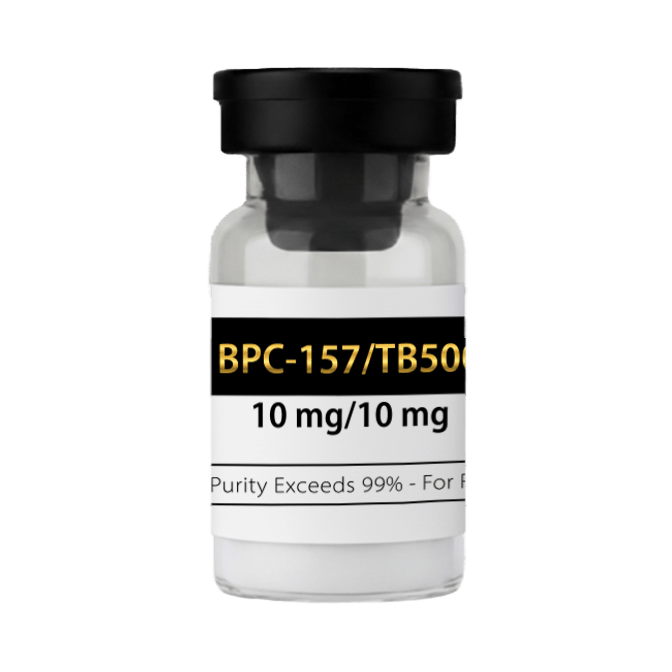
TB-500 (Thymosin Beta-4) is a synthetic version of thymosin beta-4, a naturally occurring peptide present in virtually all human and animal cells. Composed of 43 amino acids, this peptide plays a crucial role in cellular migration, differentiation, and wound healing processes.
First isolated from the thymus gland in the 1960s, thymosin beta-4 has been extensively studied for its role in actin regulation, cell migration, and tissue regeneration. The synthetic TB-500 version allows researchers to investigate these mechanisms in controlled laboratory settings.
Mechanism of Action
Actin Regulation
TB-500’s primary mechanism involves the regulation of actin, a cellular protein essential for cell structure and movement. The peptide binds to actin monomers, preventing their polymerization and facilitating cell migration—critical for wound healing and tissue repair processes.
Cellular Migration
Research demonstrates that TB-500 promotes the migration of various cell types, including endothelial cells, keratinocytes, and stem cells. This migratory effect is fundamental to tissue regeneration and repair mechanisms studied in laboratory settings.
Anti-Inflammatory Properties
Laboratory studies suggest TB-500 may modulate inflammatory responses by affecting cytokine production and immune cell activity. This anti-inflammatory potential makes it valuable for researchers studying tissue repair in inflammatory conditions.
Research Applications
Wound Healing and Tissue Repair
TB-500 has been extensively studied for its potential role in wound healing and tissue regeneration. Research areas include:
- Skin wound healing and dermal repair
- Muscle tissue regeneration
- Tendon and ligament repair mechanisms
- Corneal wound healing studies
Cardiovascular Research
Studies have investigated TB-500’s potential role in cardiovascular repair, including angiogenesis, endothelial cell migration, and cardiac tissue regeneration following injury models.
Neurological Research
Emerging research has explored TB-500’s potential neuroprotective properties and its role in neural tissue repair, making it valuable for neuroscience laboratory investigations.
Laboratory Protocol for Beginners
Reconstitution
TB-500 requires proper reconstitution before laboratory use. Follow these guidelines:
- Use sterile bacteriostatic water for reconstitution
- Typical working concentrations: 1-10 μg/mL for cell culture
- Gently swirl to dissolve—avoid vigorous shaking
- Use reconstituted solution within 14-30 days
Storage Guidelines
Proper storage ensures peptide stability:
- Lyophilized powder: Store at -20°C (stable for 2+ years)
- Reconstituted solution: 4°C, use within 14-30 days
- Protect from direct light exposure
- Minimize freeze-thaw cycles
Key Research Findings
Laboratory studies have demonstrated several significant findings:
- Enhanced wound healing in dermal injury models (Malinda et al., 1999)
- Improved cardiac function in myocardial injury studies (Bock-Marquette et al., 2004)
- Accelerated corneal wound healing (Sosne et al., 2001)
- Promoted angiogenesis in vascular studies
Research Considerations for Beginners
Purity Verification
Always verify TB-500 purity through third-party HPLC analysis. Research-grade peptides should be ≥98% pure with accompanying Certificates of Analysis.
Dosage Considerations
Research concentrations vary by application. Cell culture studies typically use 1-10 μg/mL. Always consult current peer-reviewed literature for specific protocol guidance.
Regulatory Status
TB-500 is not approved for human use by the FDA or any international regulatory body. It is strictly for laboratory research and analytical study.
Frequently Asked Questions
What is the difference between TB-500 and Thymosin Beta-4?
TB-500 is a synthetic version of thymosin beta-4, containing the active fragment of the full protein. Both share similar mechanisms but TB-500 is specifically designed for research applications.
How does TB-500 differ from BPC-157 in research?
While both peptides are studied for tissue repair, TB-500 primarily affects actin regulation and cell migration, whereas BPC-157 focuses on growth factor expression and nitric oxide pathways. Many researchers study both peptides together.
What is the shelf life of TB-500?
Lyophilized TB-500 stored at -20°C remains stable for 2+ years. Once reconstituted, use within 14-30 days when stored at 4°C.
Getting Started with TB-500 Research
For researchers beginning TB-500 investigations, start with thorough literature review, establish standardized protocols, and source high-purity peptides from verified suppliers.
Shop TB-500 for Research →References
- Malinda KM, et al. Thymosin beta4 accelerates wound healing. J Invest Dermatol. 1999;113(3):364-8.
- Bock-Marquette I, et al. Thymosin beta4 activates integrin-linked kinase and promotes cardiac cell migration, survival and cardiac repair. Nature. 2004;432(7016):466-72.
- Sosne G, et al. Thymosin beta4 promotes corneal wound healing and decreases inflammation in vivo following alkali injury. Exp Eye Res. 2001;72(4):397-404.
