
Intro to MOTS-c Research: A Beginner’s Laboratory Guide
MOTS-c (mitochondrial open reading frame of the 12S rRNA-c) represents a fascinating new class of mitochondrial-derived peptides with significant implications for metabolic research. For laboratory professionals beginning their investigation of this unique compound, understanding its mechanisms, applications, and proper handling is essential. This comprehensive beginner’s guide covers everything needed to conduct meaningful MOTS-c research.
All products discussed in this article are strictly for research use only and not intended for human consumption.
MOTS-c Products for Research
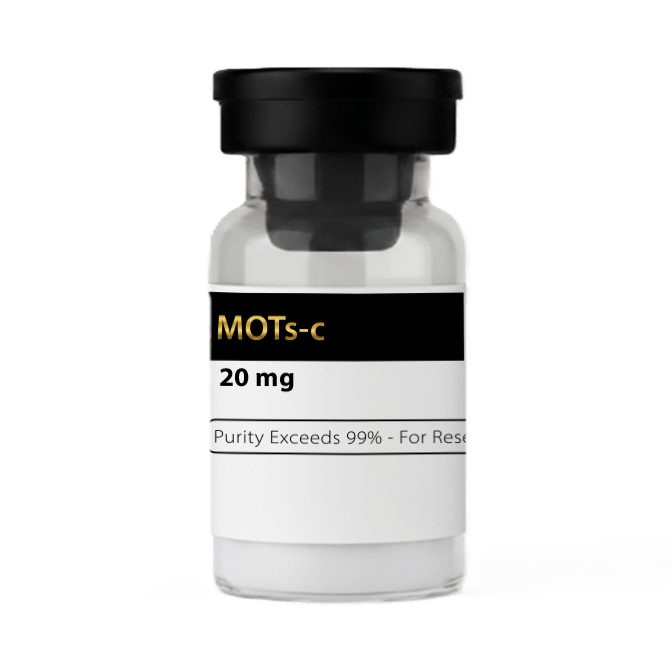
What is MOTS-c?
MOTS-c is a 16-amino-acid peptide encoded within the mitochondrial 12S rRNA gene. Discovered in 2015 by Lee et al., it represents the first mitochondrial-derived peptide shown to have systemic biological effects beyond the mitochondria. Unlike most peptides that are nuclear-encoded, MOTS-c is produced within mitochondria and acts as a signaling molecule.
Key characteristics include:
- Mitochondrial origin: Encoded by mitochondrial DNA, not nuclear DNA
- Short peptide: Only 16 amino acids in length
- Systemic effects: Acts as a hormone-like signaling molecule
- Metabolic focus: Primarily affects glucose and lipid metabolism
Mechanism of Action
AMPK Activation
MOTS-c activates AMP-activated protein kinase (AMPK), a cellular energy sensor that plays a central role in metabolic regulation. This activation triggers downstream effects on glucose uptake, fatty acid oxidation, and mitochondrial biogenesis.
Folate Cycle Inhibition
MOTS-c targets the folate cycle by inhibiting dihydrofolate reductase (DHFR), leading to accumulation of 5-aminoimidazole-4-carboxamide ribonucleotide (AICAR). AICAR is a known AMPK activator, creating a dual mechanism for metabolic enhancement.
Glucose Metabolism
Through AMPK activation, MOTS-c enhances glucose uptake in skeletal muscle and adipose tissue. This occurs through increased expression and translocation of glucose transporter 4 (GLUT4) to the cell membrane.
Research Applications
Metabolic Studies
MOTS-c has been extensively studied for metabolic research applications:
- Glucose homeostasis and insulin sensitivity
- Fatty acid oxidation and lipid metabolism
- Mitochondrial biogenesis and function
- AMPK signaling pathway research
Aging Research
As a mitochondrial-derived peptide, MOTS-c is of particular interest in aging research. Studies have investigated its role in:
- Age-related metabolic decline
- Physical function and exercise capacity
- Inflammatory processes
- Cellular senescence
Exercise Physiology
MOTS-c levels increase with exercise, making it valuable for studying exercise-induced metabolic adaptations and the connection between physical activity and metabolic health.
Laboratory Protocol for Beginners
Reconstitution
MOTS-c requires proper reconstitution before laboratory use:
- Use sterile bacteriostatic water for reconstitution
- Typical concentrations: 1-5 mg/mL for research
- Gently swirl vial—avoid shaking or vigorous agitation
- Allow complete dissolution before use
Storage Guidelines
Proper storage maintains peptide integrity:
- Lyophilized powder: Store at -20°C (stable 2+ years)
- Reconstituted solution: 4°C, use within 14-30 days
- Protect from light exposure
- Avoid freeze-thaw cycles
Key Research Findings
Laboratory studies have demonstrated several significant findings regarding MOTS-c:
- Improved glucose tolerance in high-fat diet models (Lee et al., 2015)
- Enhanced insulin sensitivity in aged mice (Reynolds et al., 2021)
- Reduced obesity and fat accumulation (Lee et al., 2015)
- Improved physical performance in aged animals (Reynolds et al., 2021)
Research Considerations for Beginners
Purity Verification
Always verify MOTS-c purity through third-party HPLC analysis. Research-grade peptides should be ≥98% pure with Certificates of Analysis available.
Dosage Considerations
Research models have used various concentrations. Typical research doses range from 0.5-2 mg per administration in animal studies. Always consult current literature for specific protocols.
Regulatory Status
MOTS-c is not approved for human use by the FDA or any international regulatory body. It is strictly for laboratory research and analytical study by qualified professionals.
Frequently Asked Questions
What makes MOTS-c different from other metabolic peptides?
MOTS-c is unique because it’s encoded by mitochondrial DNA rather than nuclear DNA. This mitochondrial origin gives it distinct properties and makes it valuable for studying mitochondrial-nuclear communication.
How does MOTS-c compare to GLP-1 for metabolic research?
While both affect metabolism, they work through different mechanisms. MOTS-c primarily activates AMPK through the folate cycle, while GLP-1 works through incretin receptors. Many researchers study both for comparative metabolic analysis.
What is the shelf life of MOTS-c?
When stored properly as lyophilized powder at -20°C, MOTS-c maintains stability for 2+ years. Reconstituted solutions should be used within 14-30 days when stored at 4°C.
Getting Started with MOTS-c Research
For researchers beginning their investigation of MOTS-c, we recommend starting with comprehensive literature review, establishing clear research protocols, and sourcing high-quality, verified peptides from reputable suppliers.
Shop MOTS-c for Research →References
- Lee C, et al. The mitochondrial-derived peptide MOTS-c promotes metabolic homeostasis and reduces obesity and insulin resistance. Cell Metab. 2015;21(3):443-54.
- Reynolds JC, et al. MOTS-c is an exercise-induced mitochondrial-encoded regulator of age-dependent physical decline and muscle homeostasis. Nat Commun. 2021;12(1):470.
- Lu H, et al. MOTS-c peptide regulates cellular senescence and metabolism. Aging Cell. 2023;22(1):e13746.
