
Intro to Ipamorelin Research: A Beginner’s Laboratory Guide
Ipamorelin represents a significant advancement in growth hormone secretagogue research. As a selective ghrelin receptor agonist, this pentapeptide offers unique properties that distinguish it from other growth hormone-releasing peptides. For laboratory professionals beginning their investigation of this compound, understanding its mechanisms, applications, and proper handling is essential. This comprehensive beginner’s guide covers everything needed to conduct meaningful Ipamorelin research.
All products discussed in this article are strictly for research use only and not intended for human consumption.
Ipamorelin Products for Research
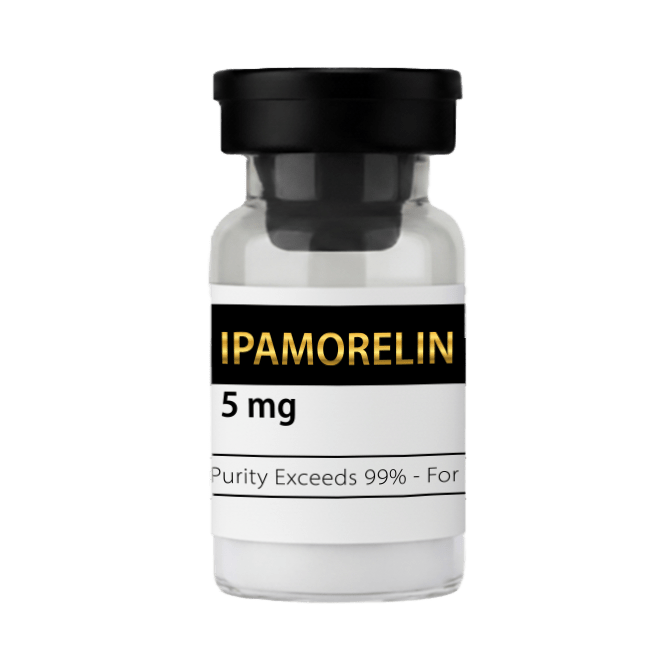
What is Ipamorelin?
Ipamorelin is a synthetic pentapeptide (Aib-His-D-2-Nal-D-Phe-Lys-NH2) that functions as a growth hormone secretagogue. Developed in the late 1990s, it was designed to be a more selective alternative to earlier GHRPs (growth hormone-releasing peptides) like GHRP-6 and GHRP-2.
Key characteristics include:
- Pentapeptide structure: Five amino acids with modified residues
- Ghrelin mimetic: Mimics the natural hormone ghrelin
- High selectivity: Minimal effects on other hormones
- No desensitization: Does not cause receptor downregulation
Mechanism of Action
Ghrelin Receptor Activation
Ipamorelin binds to the growth hormone secretagogue receptor (GHS-R1a), also known as the ghrelin receptor, in the pituitary gland. This receptor is distinct from the GHRH receptor targeted by compounds like CJC-1295 and Tesamorelin.
Growth Hormone Release
Through GHS-R1a activation, Ipamorelin stimulates growth hormone release via a different pathway than GHRH analogs:
- Activates phospholipase C signaling
- Increases intracellular calcium
- Triggers GH-containing vesicle release
- Works synergistically with GHRH pathways
Selective GH Release
Unlike some other secretagogues, Ipamorelin primarily stimulates growth hormone release without significantly affecting cortisol, prolactin, or aldosterone. This selectivity makes it valuable for studying isolated GH effects.
Research Applications
Growth Hormone Studies
Ipamorelin has been extensively studied for growth hormone research:
- Ghrelin receptor signaling pathways
- Comparative studies with GHRH analogs
- Pituitary somatotroph function
- GH pulsatility patterns
Body Composition Research
Studies have investigated Ipamorelin’s effects on:
- Lean body mass accretion
- Adipose tissue metabolism
- Bone density and formation
- IGF-1 stimulation
Combination Studies
Ipamorelin is often studied in combination with GHRH analogs like CJC-1295, as the two pathways (ghrelin receptor and GHRH receptor) work synergistically to enhance growth hormone release.
Laboratory Protocol for Beginners
Reconstitution
Ipamorelin requires proper reconstitution before laboratory use:
- Use sterile bacteriostatic water for reconstitution
- Typical concentrations: 1-5 mg/mL for research
- Gently swirl vial—avoid shaking or vigorous agitation
- Allow complete dissolution before use
Storage Guidelines
Proper storage maintains peptide integrity:
- Lyophilized powder: Store at -20°C (stable 2+ years)
- Reconstituted solution: 4°C, use within 14-30 days
- Protect from light exposure
- Avoid freeze-thaw cycles
Key Research Findings
Laboratory studies have demonstrated several significant findings regarding Ipamorelin:
- Potent GH release with minimal cortisol elevation (Raun et al., 1998)
- No significant prolactin or aldosterone stimulation
- Sustained efficacy without receptor desensitization
- Synergistic effects when combined with GHRH
Research Considerations for Beginners
Purity Verification
Always verify Ipamorelin purity through third-party HPLC analysis. Research-grade peptides should be ≥98% pure with Certificates of Analysis available.
Dosage Considerations
Research models have used various concentrations. Typical research doses range from 0.1-0.5 mg per administration in animal studies. Always consult current literature for specific protocols.
Regulatory Status
Ipamorelin is not approved for human use by the FDA or any international regulatory body. It is strictly for laboratory research and analytical study by qualified professionals.
Frequently Asked Questions
How does Ipamorelin differ from other GHRPs?
Ipamorelin is more selective than GHRP-6 or GHRP-2, primarily stimulating GH without significantly affecting cortisol, prolactin, or aldosterone. It also does not cause the hunger stimulation associated with GHRP-6.
Why combine Ipamorelin with CJC-1295?
Ipamorelin (ghrelin receptor agonist) and CJC-1295 (GHRH analog) work through different pathways. When combined, they produce synergistic GH release greater than either compound alone. This combination is frequently studied in research settings.
What is the shelf life of Ipamorelin?
When stored properly as lyophilized powder at -20°C, Ipamorelin maintains stability for 2+ years. Reconstituted solutions should be used within 14-30 days when stored at 4°C.
Getting Started with Ipamorelin Research
For researchers beginning their investigation of Ipamorelin, we recommend starting with comprehensive literature review, establishing clear research protocols, and sourcing high-quality, verified peptides from reputable suppliers.
Shop Ipamorelin for Research →References
- Raun K, et al. Ipamorelin, a new growth-hormone-releasing-peptide analogue. J Endocrinol Invest. 1998;21(3):170-7.
- Johansen PB, et al. Ipamorelin, a novel growth hormone releasing peptide, releases growth hormone with high potency and efficacy in dogs. Eur J Endocrinol. 1998;139(4):424-9.
- Gobburu JV, et al. Pharmacokinetic-pharmacodynamic modeling of ipamorelin, a growth hormone releasing peptide, in dogs. J Pharmacol Exp Ther. 1999;291(2):746-52.
