Introduction to GHK-Cu
GHK-Cu (Glycyl-L-Histidyl-L-Lysine Copper) represents one of the most extensively studied copper peptides in biomedical research. This naturally occurring tripeptide, first isolated from human plasma in 1973, has demonstrated remarkable effects on tissue repair, skin regeneration, and cellular protective mechanisms.
Discovery and Natural Occurrence
Dr. Loren Pickart first identified GHK while studying the factors that distinguished young blood from aged blood. The peptide was found to be present in high concentrations in young individuals but significantly decreased with age. This discovery sparked decades of research into GHK’s regenerative properties.
Natural sources of GHK include:
- Human plasma and saliva
- Collagen and elastin proteins
- Wound fluid and tissue extracts
- Various food proteins
Molecular Mechanisms of Action
Copper Chelation and Bioavailability
GHK functions as a copper carrier, forming a stable complex with copper ions (Cu²⁺). This chelation serves multiple purposes:
- Copper Transport: Facilitates copper delivery to cells requiring this essential trace element
- Redox Regulation: Modulates copper’s redox properties to prevent oxidative damage
- Enzyme Activation: Delivers copper to copper-dependent enzymes involved in tissue repair
Gene Expression Modulation
Research published in PMC6073405 revealed that GHK-Cu affects the expression of numerous genes involved in tissue regeneration. The study identified significant upregulation of genes associated with:
- Collagen and extracellular matrix synthesis
- Antioxidant defense systems
- Anti-inflammatory pathways
- Cell proliferation and migration
Specifically, GHK-Cu was found to reset gene expression patterns to a more youthful state, with effects on approximately 4,000 genes related to tissue repair and regeneration.
Skin Research Applications
Collagen and Elastin Production
A comprehensive review in PMC4508379 proposed that GHK functions as a complex with copper 2+ to accelerate wound healing and skin repair. The peptide stimulates both synthesis and breakdown of collagen and glycosaminoglycans, promoting tissue remodeling.
Key findings include:
- Increased collagen type I and III synthesis
- Enhanced elastin fiber formation
- Improved dermal matrix organization
- Accelerated wound closure rates
Anti-Aging Mechanisms
Research published in PMC8789089 examined GHK-Cu’s potential as an anti-aging peptide. The study documented:
- Promotion of skin remodeling and regeneration
- Prominent antioxidant and anti-inflammatory effects
- Protection against UV-induced damage
- Improvement in skin density and thickness
Stem Cell Effects
Studies have demonstrated GHK-Cu’s influence on epidermal stem cells. Research in PMC4556990 showed that Cu-GHK promotes proliferation and survival of epidermal basal stem cells through increased integrin expression. This mechanism supports:
- Enhanced skin renewal capacity
- Improved barrier function
- Accelerated healing of damaged tissue
Wound Healing Research
Tissue Repair Mechanisms
GHK-Cu has been extensively studied for wound healing applications. The peptide influences multiple phases of the wound healing cascade:
- Hemostasis: Modulates platelet function and clot formation
- Inflammation: Reduces pro-inflammatory cytokine production
- Proliferation: Stimulates fibroblast and keratinocyte migration
- Remodeling: Enhances collagen cross-linking and matrix organization
Angiogenesis Promotion
Research demonstrates that GHK-Cu stimulates the formation of new blood vessels essential for tissue repair. This angiogenic effect occurs through:
- VEGF (Vascular Endothelial Growth Factor) upregulation
- Endothelial cell proliferation and migration
- Capillary tube formation
- Improved nutrient delivery to healing tissue
Antioxidant and Anti-Inflammatory Properties
Oxidative Stress Protection
GHK-Cu demonstrates significant antioxidant capacity through multiple mechanisms:
- Scavenging of free radicals
- Chelation of redox-active metal ions
- Upregulation of antioxidant enzyme expression
- Protection of cellular components from oxidative damage
Inflammation Modulation
The peptide exhibits anti-inflammatory effects by:
- Reducing TNF-α and IL-6 production
- Modulating NF-κB signaling pathways
- Suppressing inflammatory cell infiltration
- Promoting resolution of chronic inflammation
Hair and Scalp Research
Follicle Biology
GHK-Cu has been investigated for its effects on hair follicle biology:
- Stimulation of hair follicle cell proliferation
- Extension of anagen (growth) phase
- Enlargement of follicle size
- Increased hair shaft thickness
Scalp Health
Research suggests benefits for scalp tissue health:
- Improved scalp circulation
- Reduced follicular inflammation
- Enhanced nutrient delivery to hair roots
- Support of healthy sebum production
Research Methodology
In Vitro Studies
Laboratory research has employed various cell culture models:
- Human dermal fibroblast cultures
- Keratinocyte proliferation assays
- Endothelial cell tube formation tests
- Stem cell differentiation studies
In Vivo Research
Animal studies have examined GHK-Cu effects on:
- Wound healing rates in rodent models
- Skin thickness and collagen density
- Hair growth parameters
- Tissue regeneration following injury
Formulation Considerations
Stability Factors
Research-grade GHK-Cu requires careful handling:
- pH optimization for copper complex stability
- Protection from light and oxidation
- Appropriate storage temperature
- Buffer selection for research applications
Penetration Enhancement
Studies have explored methods to enhance GHK-Cu delivery:
- Liposomal encapsulation
- Micro-needling protocols
- Iontophoresis techniques
- Penetration enhancer co-formulations
Related Research Compounds
Featured Products
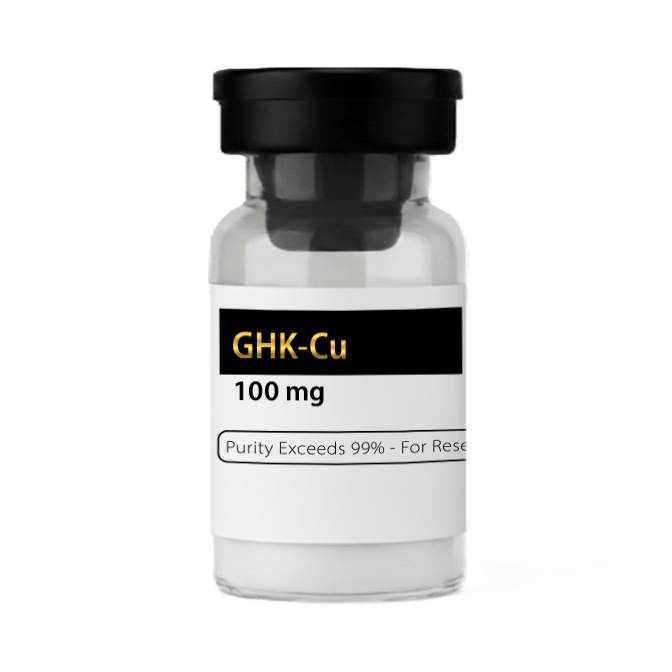
Frequently Asked Questions
What is GHK-Cu and how does it work?
GHK-Cu is a copper-binding tripeptide that occurs naturally in human plasma. It works by delivering copper to cells, modulating gene expression related to tissue repair, and stimulating collagen and elastin production. Research shows it affects approximately 4,000 genes involved in regeneration.
What research supports GHK-Cu’s effects on skin?
Multiple studies published in PubMed demonstrate GHK-Cu’s effects on skin regeneration. Research in PMC6073405, PMC4508379, and PMC8789089 document its ability to stimulate collagen synthesis, improve wound healing, and provide antioxidant protection.
How is GHK-Cu used in research settings?
Researchers use GHK-Cu to study wound healing mechanisms, skin aging processes, tissue regeneration, and cellular protective pathways. Common applications include cell culture studies, topical formulation research, and biomarker analysis.
What concentration is typically used in research?
Research studies typically employ GHK-Cu concentrations ranging from nanomolar to micromolar ranges, depending on the specific application and experimental model. Optimal concentrations vary based on cell type and research objectives.
Is GHK-Cu approved for human use?
GHK-Cu is sold strictly for research purposes and is not approved by the FDA for human consumption, diagnosis, treatment, or prevention of any disease. It is intended for laboratory research only.
Conclusion
GHK-Cu represents a remarkable peptide with extensive research supporting its role in tissue regeneration, skin repair, and cellular protection. From its discovery in human plasma to its current status as a subject of intensive biomedical research, GHK-Cu continues to reveal new mechanisms and potential applications. As research methodologies advance, our understanding of this copper peptide’s full therapeutic potential continues to expand.
RESEARCH USE ONLY | All compounds mentioned are for research purposes only. Not for human consumption. These products have not been evaluated by the FDA and are not intended to diagnose, treat, cure, or prevent any disease.