Introduction to Growth Hormone Secretagogues
Growth hormone (GH) regulation represents a critical area of endocrine research, with significant implications for metabolism, body composition, and cellular repair. Among the most studied compounds in this field are CJC-1295 and Ipamorelin—two peptides that work synergistically to stimulate the body’s natural growth hormone production.
The GH/IGF-1 Axis
The growth hormone axis operates through a complex feedback system:
- Hypothalamic Control: Growth hormone-releasing hormone (GHRH) and somatostatin regulate pituitary GH release
- Pituitary Secretion: The anterior pituitary releases GH in pulsatile patterns
- Peripheral Effects: GH stimulates IGF-1 production in the liver and peripheral tissues
- Feedback Loops: IGF-1 and GH provide negative feedback to the hypothalamus and pituitary
Understanding CJC-1295
Structure and Function
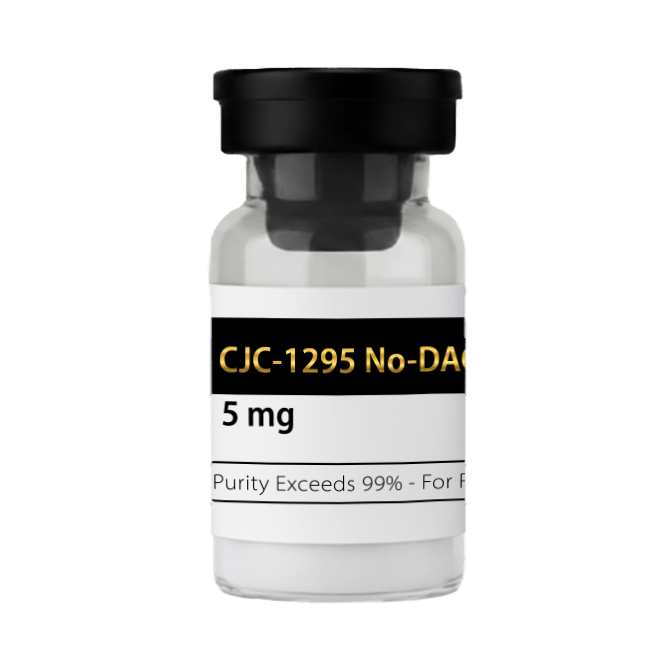
CJC-1295 is a synthetic analog of growth hormone-releasing hormone (GHRH) with modifications that extend its half-life. The compound exists in two primary forms:
- CJC-1295 without DAC: Shorter-acting form with more natural GH pulse patterns
- CJC-1295 with DAC: Longer-acting form due to drug affinity complex attachment
Mechanism of Action
Research published in PMC2787983 examined the activation of the GH/IGF-1 axis by CJC-1295. The study identified biomarkers of GH and IGF-1 action following CJC-1295 administration, demonstrating significant increases in:
- Growth hormone levels
- IGF-1 concentrations
- IGFBP-3 (IGF binding protein-3)
The mechanism involves binding to GHRH receptors on somatotroph cells in the anterior pituitary, stimulating GH synthesis and secretion.
Extended Half-Life
The DAC (Drug Affinity Complex) modification creates a covalent bond with albumin in the bloodstream, dramatically extending the compound’s half-life from minutes to days. This modification allows for:
- Reduced administration frequency
- More sustained GH elevation
- Consistent IGF-1 levels over time
Research Studies
A landmark study published in PubMed 16822960 demonstrated that once-daily administration of CJC-1295 maintains normal body composition and growth in GHRH knockout mice. These findings established the compound’s potential for sustained GH axis activation.
Understanding Ipamorelin
Growth Hormone Secretagogue Receptor Agonist
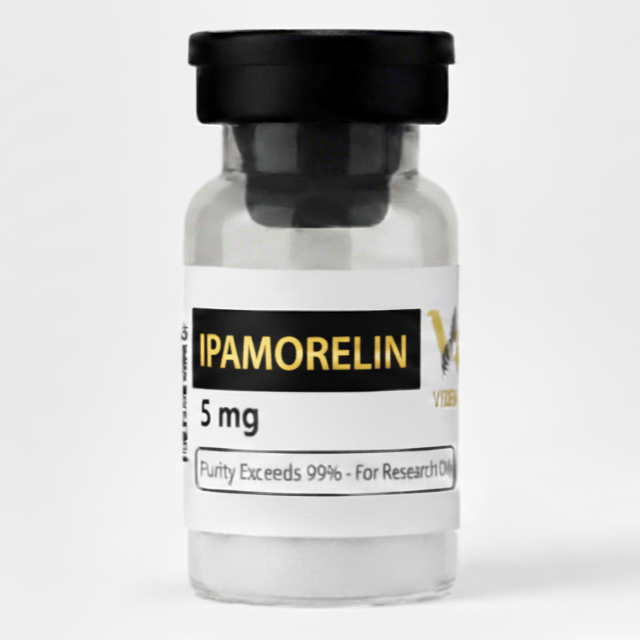
Ipamorelin belongs to a class of compounds known as growth hormone secretagogues (GHS). Unlike CJC-1295, which acts on GHRH receptors, Ipamorelin targets the ghrelin receptor (GHS-R1a) on pituitary somatotrophs.
Mechanism of Action
Ipamorelin stimulates GH release through distinct pathways:
- GHS-R1a Activation: Binding to ghrelin receptors triggers intracellular signaling
- Calcium Influx: Increased intracellular calcium promotes GH vesicle release
- Synergistic Effects: Complementary action with GHRH-mediated pathways
Selectivity Profile
Ipamorelin demonstrates remarkable selectivity for GH release compared to other secretagogues:
- Minimal cortisol elevation
- Minimal prolactin increase
- Minimal aldosterone stimulation
- Reduced appetite stimulation compared to ghrelin
This selectivity profile makes Ipamorelin particularly valuable for research focused specifically on GH axis modulation.
The Synergistic Combination
Dual-Pathway Activation
The combination of CJC-1295 and Ipamorelin represents a dual-pathway approach to GH stimulation:
| Component | Target | Mechanism |
|---|---|---|
| CJC-1295 | GHRH Receptors | Mimics natural GHRH signaling |
| Ipamorelin | GHS-R1a (Ghrelin) | Activates ghrelin receptor pathway |
Research published in Sage Journals examined injectable peptide therapy including CJC-1295 and Ipamorelin combinations, noting their complementary mechanisms in regulating growth hormone release.
Synergy Mechanism
When combined, these compounds produce synergistic effects through:
- Amplified Signaling: Simultaneous activation of distinct receptor pathways
- Sustained Release: CJC-1295 provides baseline stimulation while Ipamorelin enhances pulses
- Enhanced IGF-1: Greater overall GH exposure leads to increased IGF-1 production
- Pulsatile Preservation: Maintains natural GH secretion patterns
Research Applications
Body Composition Studies
Growth hormone research frequently examines effects on:
- Lean body mass accretion
- Fat mass reduction
- Bone density improvements
- Connective tissue strength
Metabolic Research
The GH/IGF-1 axis influences multiple metabolic parameters:
- Lipid metabolism and oxidation
- Carbohydrate tolerance
- Protein synthesis rates
- Energy expenditure
Tissue Repair Research
Research in PubMed 21204297 identified CJC-1295 as a growth-hormone-releasing factor, highlighting its classification and research applications. The tissue-regenerative properties of GH make this combination relevant for:
- Wound healing studies
- Connective tissue repair
- Muscle recovery research
- Bone fracture healing
Research Protocol Considerations
Dosage Optimization
Research protocols typically consider:
- Weight-based dosing calculations
- Frequency of administration
- Timing relative to circadian rhythms
- Duration of research periods
Measurement Parameters
Comprehensive research should assess:
- Serum GH levels (baseline and stimulated)
- IGF-1 and IGFBP-3 concentrations
- Body composition metrics
- Metabolic biomarkers
- Safety parameters
Timing Considerations
Growth hormone secretion follows circadian patterns, with peak release during sleep. Research protocols often consider:
- Evening administration timing
- Fasting state effects
- Post-exercise windows
- Sleep quality correlations
Quality and Purity Standards
Research Compound Verification
High-quality CJC-1295 and Ipamorelin should meet stringent standards:
- HPLC purity verification (98%+)
- Mass spectrometry confirmation
- Sterile manufacturing conditions
- Proper lyophilization and storage
Related Research Compounds
Frequently Asked Questions
What is the difference between CJC-1295 and Ipamorelin?
CJC-1295 is a GHRH analog that stimulates the pituitary through growth hormone-releasing hormone receptors, while Ipamorelin is a ghrelin receptor agonist that activates the GHS-R1a pathway. They work through different mechanisms to stimulate GH release.
Why do researchers combine CJC-1295 and Ipamorelin?
The combination provides dual-pathway activation of the GH axis. CJC-1295 provides sustained baseline stimulation while Ipamorelin enhances pulsatile GH release through ghrelin receptor activation. This synergy may produce more robust GH and IGF-1 elevation.
What does the research say about CJC-1295?
Research published in PMC2787983 and PubMed 16822960 demonstrates that CJC-1295 effectively activates the GH/IGF-1 axis, increases IGF-1 levels, and maintains normal body composition in research models. The DAC modification extends half-life significantly.
How does Ipamorelin differ from other GH secretagogues?
Ipamorelin shows greater selectivity for GH release compared to other secretagogues, with minimal effects on cortisol, prolactin, and aldosterone. This selectivity makes it valuable for research focused specifically on GH axis modulation.
What purity standards should research peptides meet?
Research-grade peptides should meet 98%+ purity verified through HPLC analysis, with certificates of analysis available from independent third-party laboratories.
Conclusion
The CJC-1295 and Ipamorelin combination represents a sophisticated approach to growth hormone axis research. By targeting distinct receptor pathways—GHRH receptors and ghrelin receptors respectively—this combination offers researchers a powerful tool for investigating the GH/IGF-1 axis and its effects on metabolism, body composition, and tissue repair. As research continues, our understanding of these compounds’ full potential continues to evolve.
RESEARCH USE ONLY | All compounds mentioned are for research purposes only. Not for human consumption. These products have not been evaluated by the FDA and are not intended to diagnose, treat, cure, or prevent any disease.